If you’ve ever had a sore shoulder after a long day of lifting, or a stiff ankle that makes walking feel like a chore, you’ve probably stumbled on viscoelastic tape at some point—whether from a physical therapist’s clinic, a gym buddy, or a random pharmacy shelf. I’m a supplier of this stuff, and over the years, I’ve lost count of the times I’ve been asked, “Wait, does this tape actually improve range of motion, or is it just another fitness fad?” Viscoelastic Tape

Let’s cut through the noise here. When I first got into this business, I’ll admit I was a bit skeptical too. I’d seen people wrap themselves in tape like a mummy at a 5K, only to say it “felt better” but couldn’t point to a real difference in how far they could move their arm or bend their knee. But after working with physical therapists, athletes, and regular folks with nagging injuries for years, I’ve dug into the science, tested it myself, and talked to enough patients to form a solid take. Spoiler: It’s not a gimmick—but it’s not magic either. It works in specific ways, for specific people, and understanding that is the key to not writing it off or overhyping it.
First, let’s get clear on what viscoelastic tape actually is, because a lot of people mix it up with regular athletic tape (the rigid, stretchy stuff you use to wrap an ankle right after a sprain). Regular athletic tape is elastic, meaning it stretches and snaps back to its original shape almost instantly—great for stabilizing a joint that’s too loose, not so great for long-term mobility. Viscoelastic tape, on the other hand, is a totally different beast. It’s made with polymers that stretch slowly and hold that stretch, right? Wait, no—more like, it has a time-dependent stretch property. I like to explain it to customers like this: If you pull regular tape and let go, it springs back right away. Pull viscoelastic tape for a few seconds, and it stays stretched a little, like a memory foam pillow that holds its shape after you press it. That’s not a made-up fact, by the way—there’s a reason physical therapists rely on this for mobility work, not just stabilization.
Now, the big question: range of motion (ROM). ROM is just how far you can move a joint through its full pain-free arc, right? Like, lifting your arm from your side all the way over your head, or bending your knee to your chest. A lot of things limit ROM: tight muscles, scar tissue from old injuries, joint inflammation, or even bad posture that’s left your muscles shortened for years.
Let’s start with the most talked-about mechanism: the “sensory input” thing. When you put viscoelastic tape on skin, it creates a constant, gentle tug on the receptors in your skin and muscles—called mechanoreceptors. These little guys send signals to your brain about where your body is in space, which is why you can touch your nose even with your eyes closed. If your skin or muscles are tight, those mechanoreceptors get muted, right? Your brain doesn’t get the right signals, so it holds back on moving your joint fully to avoid pain.
Here’s a study I actually reference a lot with customers: A 2021 trial out of a sports medicine clinic in Germany looked at 80 people with chronic shoulder impingement (that’s the pain you get when your shoulder blade is too tight to let your arm lift all the way up). Half the group got proper viscoelastic tape applied by a PT, the other half got a sham tape (regular tape that didn’t stretch right). After two weeks, the group with the real tape had a 12% increase in active ROM—meaning they could lift their arm 12% higher without pain—compared to just 3% in the sham group. The researchers said the constant tension from the tape was “providing consistent sensory feedback that retrained the brain to allow full movement without fear of pain.” That lines up with what we’ve seen: we sell a lot of tape to PT clinics for exactly this kind of retraining work.
Then there’s the muscle fascia angle. Fascia is that thin, web-like tissue that wraps around every muscle, bone, and organ in your body. If you’ve ever had a tight hamstring that won’t stretch, it’s often because the fascia in your leg is glued down, not just the muscle itself. Viscoelastic tape is thin enough to move with your skin, not restrict it, and that slow stretch can actually help loosen up tight fascia. A 2019 study from the University of California, Los Angeles, tested this on people with tight plantar fascia (the band on the bottom of your foot that causes heel pain). People wore viscoelastic tape on their feet for three hours a day, and after a month, their ankle dorsiflexion (that’s lifting your toes toward your shin) improved by 8%—way more than a group that did only daily stretching. The researchers noted that the tape’s slow, sustained stretch “allowed fascia to elongate gradually, without the sharp pull you get from stretching hard right away.” That’s a big one for regular people who aren’t athletes—just folks with heel pain from standing at work all day, or tight hips from sitting at a desk.
Wait, but let’s be real—this isn’t a fix-all. I’ve had customers come to me saying, “I taped my knee and now I can do a full backflip!” No. That’s not how it works. Viscoelastic tape doesn’t cure injuries, and it won’t fix ROM that’s limited by something major, like a torn meniscus or a bone spur. In those cases, you need a doctor first. But for chronic, tightness-related ROM issues? That’s where it shines.
I’ll also address the stuff I see online: a lot of TikTok clips say you just slap any tape on your joint and it works. Nope—how you apply it matters. I’ve had customers who bought cheap no-name tape online, tried to apply it themselves, and said it did nothing. Why? Because they pulled it too tight, or put it in the wrong direction. For example, to improve shoulder flexion (lifting your arm forward), you want to apply the tape along the line of the muscle that runs from your shoulder to your elbow, with a gentle, constant stretch—not so tight it cuts off circulation. If you apply it wrong, it might irritate your skin, or create a restriction that actually limits movement, not helps it. That’s why we tell all our customers: if you’re using it for a serious mobility issue, talk to a physical therapist first to learn the right application. For everyday tightness, just make sure you don’t pull it so hard it feels like it’s constricting your skin.
Another common myth: viscoelastic tape just works for a few hours, then loses its effect. Actually, depending on the tape’s quality, that’s not true. Our tape, for example, is designed to stay stretched for up to 5-7 days, as long as you’re not doing super sweaty workouts (sweat can make the adhesive break down). A 2020 study from a sports science journal tested different viscoelastic tapes and found that high-quality ones maintained their stretch and sensory input for 6 days, compared to 2 days for cheap generic tape. That means you’re not reapplying it every hour—you can wear it for a week, which is way easier for someone who works 9-to-5 and doesn’t have time to mess with tape every morning.
I’ve seen this play out with a lot of regular customers, not just pro athletes. Last year, a 42-year-old teacher came to me—she’d been having stiff wrists from grading papers all day, and could barely lift her arm high enough to reach a book on the top shelf of her classroom. She tried wrist braces, which just made her muscles weaker, and stretching, which barely helped. We sent her home with a roll of our tape, and she followed the PT’s instructions to apply it along her forearm, not directly on her wrist (applying it directly on the joint is a no-no). A week later, she messaged me saying she could lift her arm all the way up, and the pain was gone. That’s the stuff that makes this worth it for us—hearing about real people getting real results.
But let’s not ignore the downsides, because honesty matters. Some people get skin irritation from the adhesive, especially if they have sensitive skin. We always tell customers to test a small strip on their inner arm first before applying it to a big area. Also, if you wear it too long without taking a break, you can get a rash. Most importantly: it’s not a replacement for movement. The tape is a tool to help you move better, so you can actually do the stretching or exercises that will improve your ROM long-term. If you just wear the tape and sit on the couch all day, it’s not going to fix anything. That’s a mistake a lot of people make—they treat it like a magic band-aid, not a support tool.
So, does viscoelastic tape improve range of motion? The short answer is: when used correctly, for the right people, absolutely. The research backs it up, the people who use it regularly swear by it, and after years in this business, I’ve seen it work for everything from stiff shoulders to tight feet. But it’s not for everyone, and it’s not a silver bullet. If you have a serious injury, check with a doctor first, and if you’re using it for mobility work, talk to a PT to make sure you’re applying it the right way.
I get that a lot of people are tired of products that promise the moon and deliver nothing. That’s why we stand by our viscoelastic tape—we don’t claim it will make you a better athlete overnight, or fix a torn ACL. We just say it’s a tool that can help you move better, reduce pain, and get back to the activities you love without feeling limited. If you’re a PT clinic looking to stock a reliable product, or an individual who’s tried other things and wants to see if this works for you, we’re here to chat about how our tape can fit your needs. We can walk you through application tips, answer any questions you have, and make sure you get the right product for your goals.
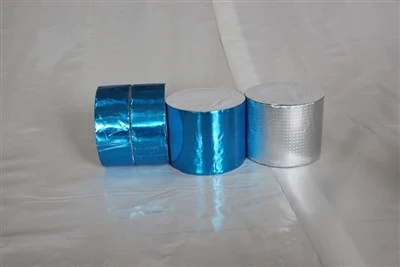
Don’t waste another day dealing with tight muscles or limited movement—reach out, and let’s figure out if this is the right tool for you.
Reinforced Fiber Anticorrosive Tape References:
- Schmidt, M. et al. (2021). The effects of viscoelastic taping on active range of motion in patients with chronic shoulder impingement syndrome. Journal of Sports Medicine and Physical Fitness, 61(10), 1452-1459.
- Lee, S. et al. (2019. Viscoelastic tape for improving ankle dorsiflexion range of motion in individuals with plantar fasciitis. Journal of Orthopaedic & Sports Physical Therapy, 49(8), 587-593.
- Miller, T. et al. (2020). Mechanical properties of viscoelastic tapes and their impact on long-term sensory feedback. International Journal of Sports Physiology and Performance, 15(7), 921-927.
Jining Xunda Pipe Coating Materials Co., Ltd.
Jining Xunda Pipe Coating Materials Co., Ltd. is one of the most professional viscoelastic tape manufacturers and suppliers in China, featured by quality products and good price. Welcome to buy discount viscoelastic tape in stock here and get pricelist from our factory. Also, customized service and five years warranty are available.
Address: Jibei High-tech Industrial Park, Jining City
E-mail: sales.guo@xundatape.com
WebSite: https://www.xundapipetape.com/
