As a seasoned supplier of solenoid valves, I often encounter customers who are keen to understand how to measure the flow rate through these essential components. Measuring the flow rate through a solenoid valve is crucial for various applications, from industrial processes to home automation. In this blog post, I’ll share some practical methods and considerations for accurately measuring the flow rate through a solenoid valve. Solenoid Valve
Understanding the Basics of Flow Rate
Before delving into the measurement techniques, it’s important to have a clear understanding of what flow rate is. Flow rate refers to the volume of fluid (liquid or gas) that passes through a given point in a specific period. It is typically measured in units such as liters per minute (L/min), cubic meters per hour (m³/h), or gallons per minute (GPM).
The flow rate through a solenoid valve is influenced by several factors, including the valve’s size, the pressure differential across the valve, the viscosity of the fluid, and the valve’s design. By accurately measuring the flow rate, you can ensure that the valve is operating within its intended parameters and that your system is functioning efficiently.
Methods for Measuring Flow Rate
There are several methods available for measuring the flow rate through a solenoid valve. The choice of method depends on various factors, such as the type of fluid, the flow rate range, the accuracy requirements, and the available budget. Here are some common methods:
1. Volumetric Method
The volumetric method involves measuring the volume of fluid that passes through the valve over a specific period. This can be done by collecting the fluid in a container of known volume and measuring the time it takes to fill the container. The flow rate can then be calculated using the following formula:
Flow Rate (L/min) = Volume (L) / Time (min)
This method is relatively simple and can provide accurate results for low to medium flow rates. However, it requires a suitable container and a way to measure the time accurately.
2. Mass Flow Meter
A mass flow meter measures the mass of the fluid passing through the valve per unit time. This method is particularly useful for measuring the flow rate of gases, as it is not affected by changes in temperature and pressure. Mass flow meters are available in various types, including thermal mass flow meters, Coriolis mass flow meters, and ultrasonic mass flow meters.
Thermal mass flow meters work by measuring the heat transfer between a heated element and the fluid. The flow rate is determined based on the amount of heat absorbed by the fluid. Coriolis mass flow meters use the Coriolis effect to measure the mass flow rate. The fluid is passed through a vibrating tube, and the Coriolis force causes the tube to twist. The amount of twist is proportional to the mass flow rate. Ultrasonic mass flow meters use ultrasonic waves to measure the flow rate. The waves are transmitted through the fluid, and the time it takes for the waves to travel between two points is measured. The flow rate is determined based on the difference in the travel time of the waves.
Mass flow meters are generally more accurate than volumetric methods, but they can be more expensive. They also require calibration to ensure accurate measurements.
3. Differential Pressure Flow Meter
A differential pressure flow meter measures the pressure difference across a constriction in the flow path. The flow rate is determined based on the Bernoulli’s principle, which states that the pressure of a fluid decreases as its velocity increases. The most common type of differential pressure flow meter is the orifice plate, which consists of a thin plate with a hole in the center. The fluid passes through the hole, and the pressure difference across the orifice is measured.
The flow rate can be calculated using the following formula:
Flow Rate (L/min) = K * √(ΔP)
where K is a constant that depends on the size and shape of the orifice, and ΔP is the pressure difference across the orifice.
Differential pressure flow meters are relatively inexpensive and can provide accurate results for a wide range of flow rates. However, they require a straight section of pipe upstream and downstream of the orifice to ensure accurate measurements.
4. Ultrasonic Flow Meter
An ultrasonic flow meter uses ultrasonic waves to measure the flow rate of a fluid. The waves are transmitted through the fluid, and the time it takes for the waves to travel between two points is measured. The flow rate is determined based on the difference in the travel time of the waves.
There are two types of ultrasonic flow meters: transit-time flow meters and Doppler flow meters. Transit-time flow meters measure the time it takes for the ultrasonic waves to travel upstream and downstream in the fluid. The flow rate is determined based on the difference in the travel time of the waves. Doppler flow meters measure the frequency shift of the ultrasonic waves caused by the movement of the fluid. The flow rate is determined based on the frequency shift.
Ultrasonic flow meters are non-invasive and can be used to measure the flow rate of a wide range of fluids, including liquids and gases. They are also relatively easy to install and maintain. However, they can be affected by the presence of bubbles or solids in the fluid, and they may require calibration to ensure accurate measurements.
Considerations for Measuring Flow Rate
When measuring the flow rate through a solenoid valve, there are several considerations that you need to keep in mind:
1. Fluid Properties
The properties of the fluid, such as its viscosity, density, and temperature, can affect the flow rate. For example, a more viscous fluid will flow more slowly than a less viscous fluid. It’s important to take these properties into account when selecting a flow measurement method and when interpreting the results.
2. Pressure Differential
The pressure differential across the valve is an important factor that affects the flow rate. The flow rate is directly proportional to the square root of the pressure differential. Therefore, it’s important to measure the pressure differential accurately to ensure accurate flow rate measurements.
3. Valve Size and Design
The size and design of the valve can also affect the flow rate. A larger valve will generally have a higher flow rate than a smaller valve. The valve’s design, such as the type of valve (e.g., globe valve, ball valve, etc.) and the valve’s opening and closing characteristics, can also affect the flow rate.
4. Accuracy Requirements
The accuracy requirements of the flow rate measurement depend on the application. For some applications, such as industrial processes, a high level of accuracy may be required. For other applications, such as home automation, a lower level of accuracy may be acceptable. It’s important to select a flow measurement method that can meet the accuracy requirements of your application.
Conclusion

Measuring the flow rate through a solenoid valve is an important aspect of ensuring the efficient operation of your system. By understanding the basics of flow rate and the various methods available for measuring it, you can select the most appropriate method for your application. It’s also important to consider the fluid properties, pressure differential, valve size and design, and accuracy requirements when measuring the flow rate.
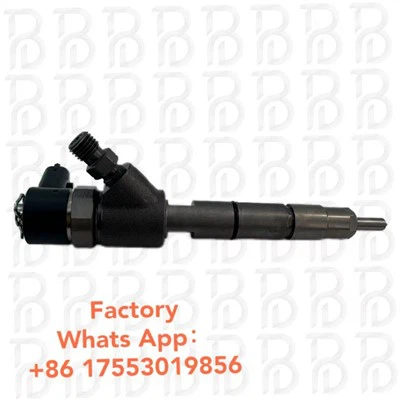
For GM Diesel Injector If you’re in the market for solenoid valves or need assistance with flow rate measurement, I’d be happy to help. Our company offers a wide range of high-quality solenoid valves and can provide expert advice on flow rate measurement and system design. Contact us today to discuss your requirements and explore how we can help you achieve your goals.
References
- "Flow Measurement Handbook: Industrial Designs, Operating Principles, Performance, and Applications" by Ralph L. Streeter
- "Fluid Mechanics" by Frank M. White
- "Instrumentation and Control Systems" by Andrew P. Johnson
Shandong Ruibote Power Technology Co., Ltd.
As one of the most professional solenoid valve manufacturers and suppliers in China, we offer a wide range of products with superior quality. Please feel free to buy advanced solenoid valve at competitive price from our factory. Contact us for more details.
Address: Jiacaiyuan Intersection West 550m, North Road Wudian Town, Mudan District Heze, Shandong Province, China
E-mail: injectornozzle@126.com
WebSite: https://www.nozzle-injector.com/
