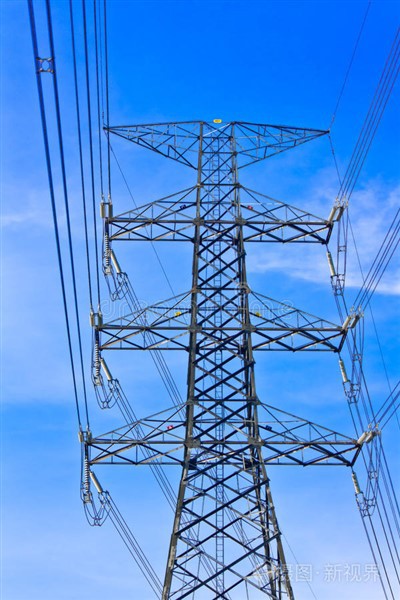
If you’ve ever stood at the base of a massive overhead line tower, craning your neck to see the tiny insulators strung between cross-arms, you might’ve wondered: who checks these structures for wear, rust, or tilt before they become a hazard? As an overhead line tower supplier who’s spent 12 years designing, manufacturing, and installing these steel giants across North America and parts of Europe, I can tell you safety monitoring isn’t a one-and-done check—it’s a mix of old-school ground work, cutting-edge tech, and a level of attention that’s non-negotiable for keeping power grids online. Overhead Line Tower

Let’s start with the basics: overhead line towers (also called transmission towers) aren’t just steel skeletons. They’re engineered to hold up to 100,000 pounds of conductor tension, 100+ mph winds, freezing rain, and even seismic activity. Over time, corrosion eats at galvanized zinc coatings, wind can shift tower foundations, and conductor vibration (called aeolian vibration) can snap bolts or warp cross-arms. Left unaddressed, small issues can spiral into full-blown outages—something utilities can’t afford, because a single 10-hour outage can cost millions in lost productivity, especially for rural communities relying on power for refrigeration, heating, or medical equipment.
First, there’s the hands-on, boots-on-the-ground monitoring that’s been around since the first transmission lines were built. My team trains our field installation crews to do a post-construction audit, but many utilities run regular patrols with linemen, climb teams, or even drone pilots. Wait—drone patrols are more common now, but the old-school work still matters. For example, last year we installed a 200-foot lattice tower in a remote section of the Rockies, where drone GPS can be spotty and wind gusts make flight too dangerous. Our subcontracted climb team spent three days checking every bolt tightness (using torque wrenches set to exact specs we provided), inspecting the zinc coating for scratches from equipment during installation, and testing the foundation’s anchor bolts. They also checked for insulator contamination—grime, bird droppings, or salt buildup (critical near coastal sites) that can cause electrical arcing. That kind of physical check catches things sensors might miss, like a tiny crack in a cross-arm that a high-res drone camera could blur over.
Then there’s the sensor tech that’s revolutionized monitoring over the last decade. We work with several sensor manufacturers that design custom gear for transmission infrastructure, so I’ve seen this up close. Many towers now have tilt sensors mounted near the base—tiny, weatherproof units that measure angular shift in millimeters. A healthy transmission tower should have a tilt of less than 0.5 degrees; anything over 1 degree signals a foundation issue, like soil erosion around anchor bolts or settlement from recent heavy rains. We also install vibration sensors on cross-arms and conductor attachment points. These track aeolian vibration frequency—too much vibration over time fatigues steel, leading to cracks that can cause tower failure. Last year, a utility we partner with caught a vibration spike on a tower in the Midwest because of a sensor alert; crews went out and adjusted conductor tension, preventing a crack from turning into a shutdown during a heatwave, when power demand was at its highest.
Corrosion monitoring is another big one, especially for towers in humid, coastal, or industrial areas. Galvanized steel towers, the standard we supply, have a zinc coating that acts as a sacrificial layer—if it rusts, the zinc oxidizes before the steel beneath does. But once the zinc is gone, steel corrodes rapidly, weakening the tower’s load capacity. We work with labs that test corrosion rates for our towers, and many utilities use ultrasonic thickness sensors to measure how much steel is left on critical load-bearing members (like the lattice’s main legs). Some even use smart coatings that change color when corrosion starts—visible to the naked eye or via drone imagery—so crews don’t have to climb towers just to check for early rust.
Remote sensing from aircraft and satellites is the third pillar. High-resolution optical drones and fixed-wing planes can capture images of hundreds of towers in a single day, looking for things like broken insulators, bent cross-arms, or uneven tower alignment. We’ve used this tech to help utilities inventory their towers after major storms, like when a 2022 derecho in Iowa knocked down dozens of lines; drone surveys let crews prioritize which towers to fix first, instead of manually checking every mile. For even larger-scale monitoring, synthetic aperture radar (SAR) satellites can pick up tiny ground shifts around tower foundations from space—shifts as small as a millimeter over months, which is way too small for ground surveys to catch. This has been a game-changer for utilities in areas with melting permafrost, where foundation settlement is a constant risk.
But here’s the thing: no single monitoring method works for every tower or every location. That’s why the best safety programs layer tech and hands-on work, tailored to each site. A tower in a remote, rocky area might only need annual climb checks plus a basic tilt sensor, while a tower in a coastal city’s industrial zone needs monthly drone surveys plus corrosion sensors every three months. As a supplier, we don’t just sell towers—we work with utilities to design monitoring plans that fit their budgets and needs. For example, a small municipal utility might not have the budget for expensive SAR satellites, so we’ll recommend a mix of affordable tilt sensors and bi-annual drone patrols, rather than forcing a one-size-fits-all solution.
I’ve seen too many tower failures over my career, most of which could’ve been prevented with better monitoring. Ten years ago, a tower in southern Ontario collapsed during a ice storm because the utility only checked towers once every five years; a tilt sensor would’ve caught the foundation shift months earlier. Last year, a tower in Texas failed during a hurricane because salt corrosion from the nearby coast ate through uncoated steel bolts—something a pre-storm corrosion check would’ve flagged. That’s why my team doesn’t just build towers to meet industry standards (like IEEE 694 or NESC); we make sure our monitoring guidance is clear, because we take pride in the lines we help build.
If you’re a utility engineer or project manager responsible for transmission line safety, the monitoring process doesn’t have to be overwhelming. Start by auditing your existing tower stock to map risk: remote towers get more wind and weather, coastal towers get more corrosion, and areas with recent construction or seismic activity need extra checks. Pair whatever methods you use with the tower design specs from your supplier—we provide all the load limits and sensor integration notes our clients need, because when we built it, we know it best.
And if you’re looking to upgrade your monitoring program or source durable, code-compliant overhead line towers that are designed to work with modern safety tools, let’s talk. We work across North America, offer custom tower designs for every terrain, and can help you build a monitoring plan that fits your project timeline and budget. Don’t wait for a small issue to become a costly outage—safety starts with knowing your towers, and we’re here to help you keep your grids up, for your communities and your bottom line.
Smart Light Poles References
American National Standards Institute. (2020). National Electrical Safety Code (NESC) 2020 Edition. Institute of Electrical and Electronics Engineers.
Institute of Electrical and Electronics Engineers. (2018). IEEE Standard for the Design of Structural Systems for Overhead Transmission Lines (IEEE Std 694-2018).
U.S. Department of Energy. (2021). Transmission Tower Monitoring: Best Practices for Grid Resilience. DOE Office of Energy Efficiency & Renewable Energy.
Hebei Yifeng Steel Structure Co., Ltd.
As one of the most professional overhead line tower manufacturers and suppliers in China, we offer a wide range of products with superior quality. Please feel free to buy cost-efficient overhead line tower for sale here from our factory. Contact us for more details.
Address: Guangchuan Town Industrial Zone, Jing County, Hengshui City, Hebei Province
E-mail: hbyfgjg@163.com
WebSite: https://www.yf-powertowers.com/
