Hey there! As a supplier of thermal analysis instruments, I often get asked if these nifty tools can be used to study phase transitions in materials. You bet they can! Today, I’m gonna dive into what phase transitions are, how thermal analysis instruments work, and why they’re the bomb for this kind of research. Thermal Analysis Instruments
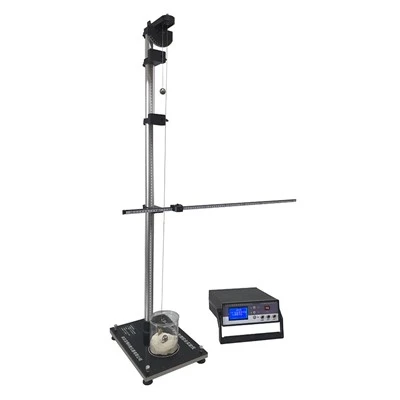
First off, what are phase transitions? Well, you’ve probably seen them in your daily life. Think about ice melting into water—that’s a phase transition from a solid to a liquid. When water boils and turns into steam, that’s another one, from a liquid to a gas. But phase transitions aren’t just about water. They happen in all sorts of materials, like metals, polymers, and ceramics.
In materials science, phase transitions can have a huge impact on a material’s properties. For example, when a metal goes through a phase transition, its hardness, electrical conductivity, or magnetic properties might change. This is super important in industries like aerospace and automotive, where the performance of materials can mean the difference between a safe flight or a smooth ride, and a disaster.
So, how do thermal analysis instruments help us study these phase transitions? There are a few different types of thermal analysis techniques, but the most common ones are Differential Scanning Calorimetry (DSC), Thermogravimetric Analysis (TGA), and Dilatometry.
Let’s start with DSC. This is like my personal favorite. DSC measures the amount of heat absorbed or released by a sample as it’s heated or cooled. When a phase transition occurs, there’s usually a change in the sample’s heat capacity. This means that the sample will either absorb or release heat at a different rate compared to when it’s in a single phase. By measuring these heat changes, we can figure out when the phase transition happened and how much energy was involved.
For example, let’s say we’re studying a polymer. As we heat it up, at a certain temperature, the polymer might go from a crystalline phase to an amorphous phase. During this transition, the polymer will absorb heat. Our DSC instrument will detect this heat absorption as a peak on a graph. The position of the peak tells us the transition temperature, and the area under the peak tells us how much energy was needed for the transition. Cool, right?
Next up is TGA. This technique measures the change in a sample’s weight as it’s heated or cooled. Some phase transitions involve a change in the sample’s composition, like when a material decomposes or loses a volatile component. TGA can detect these changes by monitoring the weight loss or gain of the sample.
For instance, if we’re looking at a ceramic material that contains some organic additives, as we heat it up, the organic additives might burn off. This will cause a weight loss in the sample, which our TGA instrument can measure. By analyzing the weight loss curve, we can figure out the temperature at which the decomposition occurred and how much of the organic additives were present in the sample.
Dilatometry, on the other hand, measures the change in a sample’s dimensions as it’s heated or cooled. During a phase transition, a material’s volume or length might change. Dilatometry can detect these dimensional changes with high precision.
Say we’re studying a metal alloy. As it goes through a phase transition, the atoms in the alloy might rearrange themselves, causing the alloy to expand or contract. Our dilatometer can measure these changes in length or volume. By analyzing the dimensional change curve, we can determine the transition temperature and understand how the material’s structure is changing during the phase transition.
Now, you might be wondering why thermal analysis instruments are so great for studying phase transitions. Well, for starters, they’re super precise. These instruments can detect even the slightest changes in heat, weight, or dimensions, which means we can get really accurate data about the phase transitions.
They’re also non-destructive. In most cases, we can use thermal analysis techniques to study a sample without ruining it. This means we can use the same sample for other tests or experiments later on.
Another advantage is that thermal analysis instruments are versatile. We can use them to study a wide range of materials, from small molecules to large polymers and complex composites. And we can do it at different temperatures and under different conditions, which allows us to simulate real-world scenarios.
Let me share a real-life example. A few months ago, we worked with a client who was developing a new type of battery. They needed to understand how the electrolyte in the battery behaved during phase transitions. We used our DSC and TGA instruments to study the electrolyte at different temperatures and pressures. The data we collected helped them optimize the battery’s performance and improve its lifespan.
So, if you’re in the business of materials research or development, and you’re interested in studying phase transitions, thermal analysis instruments are definitely the way to go. At our company, we offer a wide range of high-quality thermal analysis instruments that are easy to use and provide accurate results. Whether you’re a university researcher, a corporate scientist, or an engineer in a manufacturing plant, we’ve got the right instrument for you.
If you’re curious about how our thermal analysis instruments can help you with your phase transition studies, don’t hesitate to reach out. We’re always happy to have a chat, answer your questions, and help you find the perfect instrument for your needs. You can contact us to start a conversation about your project and see how we can support you.
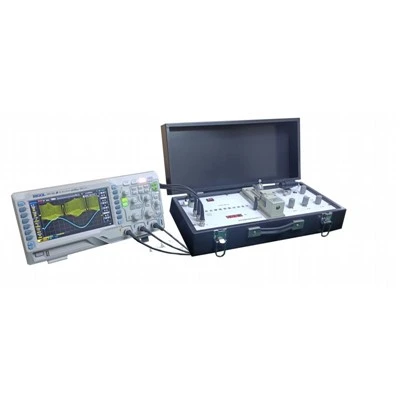
To sum it up, thermal analysis instruments are a powerful tool for studying phase transitions in materials. They offer precise, non-destructive, and versatile ways to understand the behavior of materials during these important changes. So, if you’re looking to take your materials research to the next level, give thermal analysis a try.
Optical Instruments References
- Wendlandt, W. W. (1986). Thermal methods of analysis: principles, applications, and problems. J. Wiley.
- Opfermann, J. (2000). Differential scanning calorimetry: an introduction for beginners. Springer Science & Business Media.
- Honikman, R. (1993). Thermogravimetric analysis: principles and applications. Wiley.
Nanjing Longbow Scientific&Educational Instrument Co., Ltd.
As one of the most professional thermal analysis instruments manufacturers and suppliers in China, we’re featured by quality products and good service. Please rest assured to buy customized thermal analysis instruments from our factory. If you have any enquiry about pricelist, please feel free to email us.
Address: Room D, 22th floor, No.305, North Jiangdong Road, Nanjing,Jiangsu Province, China
E-mail: 79425380@qq.com
WebSite: https://www.lb-physics.com/
