As a reputable supplier of welding automation equipment, I’ve witnessed firsthand the transformative impact that our products have on productivity across various industries. In this blog post, I will explore how welding automation equipment revolutionizes manufacturing processes, leading to significant improvements in efficiency, quality, and ultimately, productivity. Welding Automation Equipment

Precision and Consistency
One of the most significant advantages of welding automation equipment is its ability to provide unparalleled precision and consistency. Manual welding is highly dependent on the skill and experience of the welder, which can lead to variations in weld quality. Even the most skilled welders can experience fatigue, which may affect the uniformity of their work over time.
In contrast, automated welding systems are programmed to execute precise welding paths with consistent speed, voltage, and wire feed rates. This level of precision ensures that each weld meets the exact specifications required by the project, reducing the likelihood of defects and rework. For example, in the automotive industry, where safety and quality are paramount, automated welding systems are used to create strong, uniform welds in car frames and components. These consistent welds enhance the overall structural integrity of the vehicle, reducing the risk of failures and recalls.
Increased Speed and Throughput
Automation significantly increases the speed of the welding process. Automated welding systems can operate continuously without breaks, unlike human welders who require rest periods. This continuous operation allows for a much higher volume of work to be completed in a shorter period.
Furthermore, advanced welding automation equipment is equipped with features such as multi – torch systems and high – speed welding capabilities. Multi – torch systems can simultaneously perform multiple welds, effectively multiplying the output of a single welding station. High – speed welding techniques, enabled by the precise control of automation, can complete welds much faster than traditional manual methods. For instance, in the production of large – scale steel structures like bridges and skyscrapers, automated welding systems can quickly assemble large sections, reducing the overall construction time.
Reduction in Labor Costs
Welding automation equipment can lead to substantial savings in labor costs. Hiring and training skilled welders can be expensive, and there is often a shortage of qualified personnel in the market. Automated welding systems can take over repetitive and labor – intensive welding tasks, allowing companies to reallocate their human resources to more complex and value – added activities.
Moreover, the cost of maintaining a workforce, including salaries, benefits, and safety training, can be a significant burden on a manufacturing company. By investing in welding automation equipment, companies can reduce their reliance on a large number of manual welders, leading to long – term cost savings. For small and medium – sized enterprises, this reduction in labor costs can be a game – changer, enabling them to compete more effectively in the global market.
Improved Safety
Safety is a critical concern in any welding operation. Manual welding exposes workers to various hazards, including welding fumes, radiation, and the risk of burns and injuries from handling hot materials and equipment. Welding automation equipment helps to mitigate these risks by removing the need for workers to be in close proximity to the welding arc for extended periods.
Automated welding systems are typically enclosed in protective cabins or equipped with safety shields, which contain the welding fumes and radiation. Workers can operate the equipment from a safe distance using control panels, reducing their exposure to dangerous substances. Additionally, automated equipment is designed with safety features such as emergency stop buttons and sensors to detect malfunctions, further protecting the workforce.
Enhanced Quality Control
Quality control is easier to achieve with welding automation equipment. The automated systems are integrated with sensors and monitoring devices that can continuously measure and adjust welding parameters. These sensors can detect variations in the welding process, such as changes in temperature, voltage, or wire feed rate, and make real – time adjustments to ensure that the weld quality remains consistent.
In addition, automated welding systems can generate detailed reports on each weld, including information on welding parameters, duration, and quality metrics. These reports provide valuable data for quality control purposes, allowing manufacturers to track the performance of their welding processes and identify areas for improvement. For industries with strict quality standards, such as aerospace and medical device manufacturing, this level of quality control is essential.
Flexibility and Adaptability
Modern welding automation equipment is highly flexible and adaptable to different welding tasks. Programmable controllers allow operators to easily change welding programs for different part geometries, welding styles, and production requirements. This flexibility makes it possible for manufacturers to quickly switch between different products or production runs, reducing downtime and increasing overall productivity.
For example, in the fabrication of custom metal products, such as furniture or architectural elements, automated welding systems can be programmed to create unique weld patterns and designs. This adaptability enables manufacturers to offer a wider range of products to their customers, meeting diverse market demands.
Integration with Other Manufacturing Processes
Welding automation equipment can be seamlessly integrated with other manufacturing processes, such as material handling, machining, and assembly. This integration creates a more streamlined and efficient production line, reducing the time and effort required to transfer parts between different operations.
For instance, automated welding systems can be integrated with robotic material handling systems. The robots can pick up raw materials, position them for welding, and then transfer the welded parts to the next stage of the production process. This integration not only improves productivity but also reduces the risk of damage to the parts during handling.
Long – Term Investment and Return on Investment (ROI)
Investing in welding automation equipment is a long – term strategy that can yield significant returns. Although the initial cost of purchasing and installing automation equipment can be high, the long – term benefits in terms of increased productivity, reduced labor costs, and improved quality far outweigh the upfront expenses.
Over time, the savings in labor, rework, and quality control, combined with the increased production capacity, result in a positive return on investment. Additionally, as technology advances, the capabilities of welding automation equipment continue to improve, further enhancing its value and productivity – enhancing potential.
Conclusion
In conclusion, welding automation equipment has a profound impact on productivity in the manufacturing industry. Its ability to provide precision and consistency, increase speed and throughput, reduce labor costs, improve safety, enhance quality control, offer flexibility, integrate with other processes, and provide a good return on investment makes it an indispensable tool for modern manufacturers.
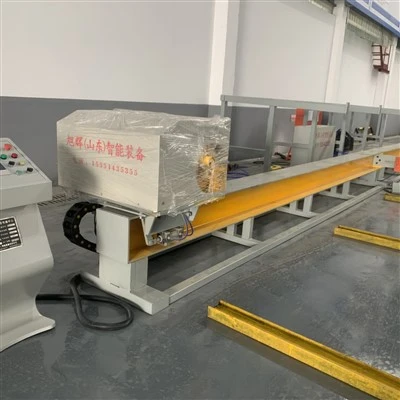
If you are looking to enhance the productivity of your welding operations, I invite you to reach out to us. We have a team of experts who can assess your specific needs and recommend the most suitable welding automation solutions for your business. Whether you are a large – scale manufacturer looking to optimize your production line or a small – business owner aiming to increase efficiency, our range of high – quality welding automation equipment can help you achieve your goals. Contact us today to initiate a discussion about how we can work together to transform your welding processes and boost your productivity.
Welding Automation Equipment References
- Nelson, C. H. (2004). Welding Metallurgy. ASM International.
- American Welding Society. (2018). AWS Welding Handbook, Volume 1: Welding Processes.
Xuhui (Shandong) Intelligent Equipment Co., Ltd.
Xuhui (Shandong) Intelligent Equipment Co., Ltd. is one of the most professional welding automation equipment manufacturers and suppliers in China. Please feel free to wholesale high quality machines made in China here and get quotation from our factory. Contact us for customized service.
Address: Industrial Park, Hetaoyuan Town, Juye County, Heze City, Shandong Province, China.
E-mail: yue@xuhuijx.com
WebSite: https://www.xuhuiintelligent.com/
