If you’ve ever stood on a school playground during lunch break, you’ve seen it: kids chasing each other across uneven blacktop, soccer balls flying toward adjacent roads, and referees struggling to keep a youth basketball game from spilling into the parking lot. As a court fence supplier, I’ve spent the last 12 years talking to school administrators, athletic directors, and maintenance staff who all ask the same question: “Are there court fence options that actually work for our unique needs—not just generic chain-link that rusts in three years?” Court Fence
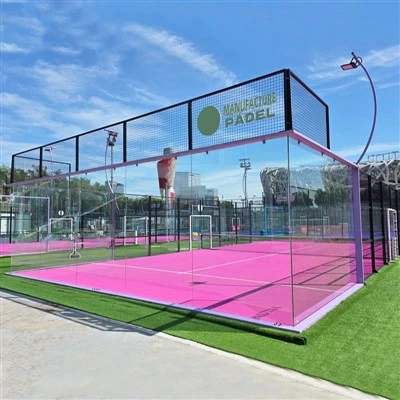
The short answer is yes. The long answer is that schools don’t need to pick between cheap, flimsy fencing that becomes a safety hazard or expensive, custom solutions that blow their recreational budget. Over the years, I’ve worked with 200+ K-12 and college campuses, and I’ve seen firsthand which fence types stand up to student use, harsh weather, and years of heavy play. Let’s break down the best options, how they measure up to common school priorities, and what to avoid when choosing a court fence.
First, let’s get one thing straight: school court fencing isn’t just a border. It’s a safety barrier, a way to keep balls contained, and even a tool to reduce liability. When a soccer ball flies into a parking lot, that’s a student’s parents’ car, a bystander, or even a street—all of which lead to headaches for the school. Fences also keep younger kids off adjacent athletic fields or roadways, and for inner-city schools, they add an extra layer of security to the playground. The best options balance durability, cost, and flexibility because schools have very specific constraints: tight budgets, limited installation timelines (usually done over summer break), and need for easy maintenance.
Let’s start with the most common (and most misunderstood) option: galvanized chain-link. For years, chain-link was the go-to because it’s cheap and easy to install. But I’ve seen so many schools regret choosing it long-term. Standard chain-link is made of thin wire that bends easily when a kid falls on it, or when a soccer ball hits it at full speed. In salt-air climates (like coastal Florida or California), it rusts within 2-3 years, and the wires snap, leaving gaps that let balls escape. That said, not all chain-link is created equal. We offer heavy-gauge galvanized chain-link with a 12.5-gauge wire (thicker than the standard 11.5 or 12-gauge) and a double-vinyl coating for extra rust resistance. This type lasts 10-15 years, and the vinyl coating also prevents scratches—important because schools often have basketball hoops mounted on fences, and scratched metal can chip or corrode over time. The downside? It still has that industrial look, so some schools that want a more polished campus might skip it. But for schools on a tight budget, it’s a solid option if you spec the right gauge and coating.
Next up: aluminum court fencing. This is our most popular product for schools these days, and for good reason. Aluminum is lightweight, rust-proof (no galvanizing or coating needed—its natural oxide layer protects it), and strong enough to handle almost every type of impact from playground balls. We use 6063-T5 aluminum, a marine-grade alloy that’s tested to withstand high winds, heavy rain, and even minor impacts from bikes or skateboards (a common problem on middle school playgrounds). Unlike steel, aluminum doesn’t dent or bend easily, so it stays looking like new for decades. We also offer custom powder coating in school colors—navy blue, forest green, even bright gold—so fences match the school’s branding, which is a big win for administrators who want their campus to feel cohesive. The installation is faster than steel, too, because aluminum is lighter, so we can usually get a full court fenced in 2-3 days, perfect for schools that need to get it done before the first day of class. The only tradeoff? It’s a bit more expensive than chain-link, but when you factor in zero maintenance, no rust, and a 20+ year lifespan, it’s often cheaper in the long run than replacing chain-link every 3 years. I had a middle school in suburban Chicago switch from chain-link to aluminum fencing 8 years ago, and they’ve never had to touch it—no rust, no broken wires, no complaints from parents about balls hitting cars. That’s the kind of value schools care about.
If you have a larger court or multi-use athletic space (like a stadium track with a practice field, or a playground that doubles as a basketball court), you might want to look at steel mesh fencing. Wait, not just any steel—hot-dip galvanized steel with a heavy vinyl coating, designed specifically for high-impact areas. This is the most durable option we offer, built to handle heavy equipment, large balls, and years of heavy use. It’s common on college campuses or municipal parks that host youth leagues, where the fence is exposed to constant abuse. The mesh is smaller than chain-link (usually 2” x 4” openings instead of 2” x 6”), so even small balls like tennis balls or baseballs don’t get through. The downside? It’s heavier than aluminum, so installation takes a bit longer, and it’s more expensive upfront. But for high-traffic areas, it’s worth every penny. We installed steel mesh fencing for a public high school in Houston that hosts city-wide youth soccer tournaments—they had chain-link before, and after every tournament, they’d have to repair bent wires or replace broken links. After switching to steel mesh 5 years ago, they haven’t had a single repair. That’s the kind of longevity that makes school administrators breathe easy.
Now, let’s talk about options for smaller spaces or multi-use areas, like a playground that’s both a basketball court and a place for recess. A lot of schools ask about temporary fencing, especially for events like field days or summer camps. But temporary fence panels (the chain-link ones you see at construction sites) aren’t designed for permanent use—they blow over in strong winds, and kids can easily climb or bend them. Instead, we offer semi-permanent modular fencing that bolts into the ground but can be disassembled if the school needs to reconfigure the space later. It’s heavier than temporary fencing, so it’s stable, but it’s still flexible enough to move if the school decides to turn a playground into a small soccer field for a year. This is a great middle ground for elementary schools that have limited space and might need to adjust their athletic areas as students grow.
Wait, there’s one more option that’s gaining popularity: polypropylene (plastic) fencing. I know, I know—plastic sounds cheap, and for a while, it was. But modern polypropylene fencing is UV-stabilized, so it doesn’t fade or crack, and it’s designed specifically for playground use. It’s lightweight, so it’s easy to install, and it’s non-conductive, which is a big plus for schools that are worried about lightning strikes or electrical hazards. The downside? It’s not as strong as aluminum or steel—if a kid runs full-speed into it, it might bend, though it will usually bounce back. It’s also not as aesthetically pleasing as powder-coated aluminum, so it’s mostly used for temporary spaces or smaller playgrounds. We’ve only sold a handful of these to schools, and usually only when they’re on an extremely tight budget and need a quick fix for a playground that’s on a busy street.
Now, let’s get real about what schools should avoid when choosing court fencing. The biggest mistake I see is going for the absolute cheapest option without thinking about long-term costs. I once worked with a school district in rural Ohio that bought super-thin chain-link for 3 playgrounds, saving $1,200 upfront. Within 2 years, the wires were rusted, and they had to replace all three fences at a cost of $8,000. That’s a $6,800 loss because they didn’t spec the right wire gauge and coating. Another mistake is not considering ground conditions. If a school’s playground is on sloped ground, standard fence posts might not be deep enough, leading to leaning fences that become safety hazards. We always do a site assessment before quoting—we check the soil type, slope, drainage, and even nearby trees that could fall on the fence—to make sure the installation is secure.
Another thing to keep in mind is maintenance. Schools don’t have a big maintenance budget for their playgrounds, so they need fences that are easy to clean. All of our aluminum and steel fences are pressure-washable, which is perfect for wiping off grass stains, dirt, and even graffiti. (We also offer graffiti-resistant coatings that can be cleaned with a mild soap, no harsh chemicals needed.) Chain-link, on the other hand, can be hard to clean, and the gaps between wires trap dirt and moss, which is hard to get out without scrubbing every inch.
Wait, let’s not forget about accessibility. A lot of schools have students with disabilities, so fences can’t block pathways or become a barrier for wheelchairs. All of our fences are ADA-compliant—we install gates that are at least 36 inches wide, so wheelchairs can get through easily, and we make sure there are no protruding parts that could catch on crutches or walkers. That’s a detail many generic fence suppliers miss, but it’s non-negotiable for schools.
I’ve been in this business long enough to know that the best court fence for a school isn’t the one with the fanciest name or the lowest price. It’s the one that fits their specific needs: their budget, their climate, their campus size, and their long-term plans. A small elementary school with a $5,000 total budget for a playground fence might do great with heavy-gauge chain-link. A mid-sized middle school with a $15,000 budget and school colors to match will love aluminum fencing. A high school hosting city tournaments will want steel mesh. There’s no one-size-fits-all, but there’s a perfect option for every school.
If you’re a school administrator, athletic director, or maintenance staff reading this, don’t just take my word for it. Ask other schools in your area what they use— I’ve had so many superintendents tell me they switched to our fences after seeing a neighboring school’s fence that’s still working great 10 years later. The last thing you want is to deal with a broken fence over summer break, right before school starts, when you’re already busy ordering supplies and hiring teachers. We offer installation over extended periods, so we can work around your school’s schedule, and we provide a 10-year warranty on all of our aluminum and steel fences, so you don’t have to worry about unexpected repairs.
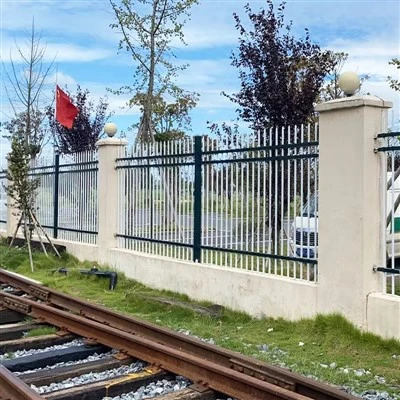
At the end of the day, school fences are more than just a border—they’re a safety net for kids, a way to keep play areas secure, and a small part of making sure schools are places where kids can run, play, and learn without worrying about a soccer ball hitting a car or a fence falling over. If you’re ready to stop settling for generic fencing and find an option that works for your school’s unique needs, reach out to us to schedule a site assessment and get a customized quote. We don’t do one-size-fits-all, because your school deserves a fence that’s built for your kids, your campus, and your budget.
Commercial Fencing References:
- National Recreation and Park Association. (2021). Safety Guidelines for Outdoor Playground Equipment and Surroundings.
- American Fence Association. (2022). Commercial Fencing Specifications for Educational Facilities.
- International Code Council. (2023). Accessibility Standards for Site and Facilities.
- Center for Disease Control and Prevention. (2020). Youth Sports Injury Prevention: Barrier Fence Effectiveness.
Anping County Chengrun Metal Products Co., Ltd.
With abundant experience, we are one of the most professional court fence manufacturers and suppliers in China. Please feel free to buy premium court fence for sale here from our factory. All customized metal products are with high quality and competitive price.
Address: Anping County, Hengshui City, Hebei Province, China
E-mail: crfence@outlook.com
WebSite: https://www.chengrunfence.com/
