When I walk through our production floor here, I stop at the finished piston line sometimes and watch our team inspecting every single unit before it ships. What I always point out to the new hires is that a piston isn’t just a metal part that slaps up and down in an engine. It’s a precision component that relies on one thing more than any other to do its job right: proper lubrication. As a piston supplier who’s been in this game for over 12 years, I’ve seen how skipping the right lubrication practices doesn’t just hurt performance—it can turn a good piston into a waste bin part in weeks, sometimes days. That’s why today I want to break down exactly how proper lubrication ties to piston performance, from the smallest friction point to the long-term life of the engine it sits in. Piston
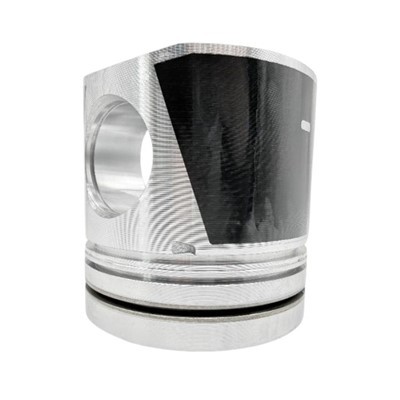
Let’s start with the basics of how a piston works, because if you don’t get that, you won’t get why lubrication matters so much. A piston moves in a cylinder at speeds up to 50 miles per hour in some high-performance engines. It’s exposed to temperatures that can hit 2,500 degrees Fahrenheit at the top of its stroke. Between the piston and the cylinder wall, there’s a tiny gap—sometimes only a few thousandths of an inch. Without something filling that gap to separate the two metal surfaces, you’re looking at immediate metal-to-metal contact. That contact doesn’t just create drag; it generates heat, wears down the piston skirt and cylinder wall, and can even seize the engine if it goes too far. But it’s not just about stopping wear. Proper lubrication does a handful of other jobs that directly affect how well a piston operates, and most of our clients don’t realize these until we point them out.
First, lubrication reduces friction. Friction in an engine is one of the biggest drains on fuel efficiency and power. Think about it: every time the piston has to work against metal scraping on metal, that’s energy that doesn’t go to turning the wheels. For light-duty passenger vehicles, that can lower fuel economy by 1 to 3 percent, according to industry data. For heavy-duty trucks or race engines, that number jumps even more. Proper lubrication forms a thin, continuous oil film between the piston skirt and cylinder wall, and between the piston rings and their grooves. This film acts like a cushion, so the two metal surfaces never touch directly. Our engineering team has tested this with our performance pistons: when paired with the right viscosity lubricant, friction is cut by up to 40 percent compared to running without proper oil. That’s not just a small win—it’s the difference between a truck getting 6 mpg vs. 6.2 mpg, or a race car being able to pull ahead on a straightaway because it’s not wasting energy on friction.
Second, lubrication manages heat. Pistons don’t have their own cooling system, unlike many other engine components. The heat from combustion has to transfer through the piston crown, down the skirt, and then to the cylinder wall, where coolant can carry it away. Oil plays a huge role here. The oil film between the piston and cylinder doesn’t just separate metal—it acts as a heat conductor, pulling excess heat away from the piston before it can cause damage. If lubrication is insufficient, that heat builds up. A piston can expand too much, which causes it to seize in the cylinder, or the aluminum alloy of the piston can start to warp at high temperatures. We had a client a few years back who installed our pistons but used the wrong type of oil for their heavy-duty engine. They told us their engines were blowing pistons every 5,000 miles. When we recommended a specific high-thermal-stability lubricant, that number jumped to over 50,000 miles. That’s a direct result of better heat transfer through proper oiling.
Third, lubrication helps control emissions. Modern engines have tight emissions standards, and pistons play a big part in that. The piston rings are responsible for sealing combustion gases, so they don’t leak into the crankcase, and for scraping excess oil off the cylinder wall so it doesn’t get burned in the combustion chamber. If lubrication is poor, the rings can wear down, or the oil film can break down. That leads to oil burning, which increases hydrocarbon emissions. It also lets unburned combustion gases escape, lowering fuel efficiency and increasing NOx emissions. As a piston supplier, we work closely with lubricant manufacturers to make sure our pistons are designed to work with oils that meet current emissions regulations. For example, our gas direct-injection pistons have a modified ring groove that works with low-viscosity oils required by modern engines to cut emissions. If a customer uses the wrong oil, even if it’s labeled for their engine model, that modification doesn’t work as intended, and emissions go up.
Now, it’s not just any lubrication that works. We see this all the time: a customer will call us saying our pistons are wearing out too fast, and when we ask them what oil they’re using, it’s the wrong viscosity, or it’s old and degraded. Viscosity is key here. Viscosity is just a fancy word for an oil’s thickness. If the oil is too thin, it can’t form a proper film between the piston and cylinder, especially at high temperatures. If it’s too thick, it creates more friction, making the piston work harder than it should. For most passenger vehicle engines, the recommended viscosity is 5W-30 or 0W-20, but for high-performance engines or heavy-duty diesel engines, it’s often 15W-40 or higher. We have a technical team that works with every client to match their piston design and engine type to the right lubricant. Last year, a client who builds high-performance motorcycles reached out to us because their pistons were failing at 10,000 miles. After testing, we found they were using 5W-30 oil in an engine built for 10W-50. Switching to the recommended oil fixed the issue, and their piston life jumped to over 30,000 miles. That’s a simple fix that made a huge difference.
Another factor is oil degradation. Over time, oil breaks down from heat, contaminants, and repeated use. Its viscosity changes, and additives that help with lubrication, heat transfer, and wear protection wear out. If an engine isn’t getting regular oil changes, even the best oil will start to cause problems for the piston. We’ve seen cases where a truck that only gets an oil change once every 15,000 miles starts having piston skirt wear, even if it’s using the right viscosity oil. The degraded oil can’t protect the piston, leading to metal contact. Our advice to every client is to follow the engine manufacturer’s oil change interval, and to use oil that meets the API or ACEA standards for their engine type.
Proper lubrication also affects piston ring performance, which is tied directly to overall engine performance. Piston rings are the small metal rings that sit in grooves on the piston. There are usually two compression rings on top, which seal combustion gases, and one oil control ring below, which scrapes excess oil off the cylinder wall. If lubrication is insufficient, the rings can stick in their grooves, which prevents them from sealing properly. That leads to blow-by (combustion gases escaping into the crankcase) or oil burning, as I mentioned earlier. We design our pistons with ring grooves that have a specific surface finish to work with modern lubricants. If a customer uses a lubricant that doesn’t have the right additives, the rings can stick even if the oil is the correct viscosity. For example, some low-friction oils for fuel efficiency have fewer anti-wear additives, which can cause ring sticking in our heavy-duty diesel pistons. We flag that for every client when they place an order, so they don’t run into that issue.
I want to talk a bit about common mistakes we see from customers, because many of them are avoidable. First, using cheap or off-brand lubricants. Some customers think all oils are the same, but that’s not true. Top-tier oils have better additives, more stable viscosity, and better heat resistance than lower-quality options. We’ve seen a customer switch to a cheaper oil to save money, only to have their piston wear rate double. The cost of replacing pistons and repairing engines is way higher than the difference in oil cost, so that’s a false economy. Second, mixing oils. Some people think you can mix different brands or viscosities, but that can break down the oil’s additives, making it less effective. Third, ignoring oil level. If the oil level is too low, there’s not enough to form that protective film. We’ve seen engines where the oil level was a full quart low, and the pistons showed signs of severe wear in just a few hundred miles. That’s a preventable issue that just takes 5 minutes to check every few weeks.
As a piston supplier, our job isn’t just to build a good piston and send it out the door. It’s to make sure our customers have all the information they need to keep that piston performing at its best. That’s why we offer free technical consultations for every client—whether they’re a small engine repair shop or a large OEM. We go over lubrication best practices, match the right oil to their piston design, and help them troubleshoot any issues that come up. We also provide detailed specifications for each of our piston models, including the recommended oil viscosity, heat range, and maintenance tips related to lubrication.
The thing that sticks with me most after 12 years in this business is that the best piston in the world won’t perform if it doesn’t have the right lubrication. I’ve seen so many engines that would have run for hundreds of thousands of miles if the owner had just used the right oil, and so many perfectly good pistons wasted because of a simple lubrication mistake. That’s why we make lubrication a key part of every conversation with our clients, not just an afterthought.

If you’re an engine builder, a repair shop owner, or an OEM looking to upgrade your piston performance or fix issues with your current parts, we’re here to help. Our team can work with you to select the right piston for your engine, and provide guidance on the lubrication practices that will make that piston last longer, run more efficiently, and meet your performance goals. Reach out to our team to connect and discuss your project needs.
DEUTZ Piston References:
- Society of Automotive Engineers (SAE) International. (2021). Friction Effects on Engine Efficiency. SAE Technical Paper Series.
- Internal Combustion Engines Fundamentals. (2018). McGraw-Hill Education.
- American Petroleum Institute (API). (2022). Engine Oil Lubrication Guidelines for Passenger and Commercial Vehicles.
- Automotive Engineering International. (2020). Pistons, Rings, and Lubrication: Key to Modern Engine Performance. SAE International Press.
- Diesel Technology Forum. (2021). Heavy-Duty Engine Lubrication and Component Durability. Technical Report.
Hebei Yuwei Piston Co., Ltd.
As one of the most professional piston manufacturers and suppliers in China, we’re featured by quality products and good service. Please rest assured to buy customized piston made in China here from our factory. Also, quotation is available.
Address: Beizhujiacun Village, Sujiuzhuang Town, Ningjin County, Xingtai City, Hebei Province
E-mail: jack@ywpiston.com
WebSite: https://www.ywpiston.com/
